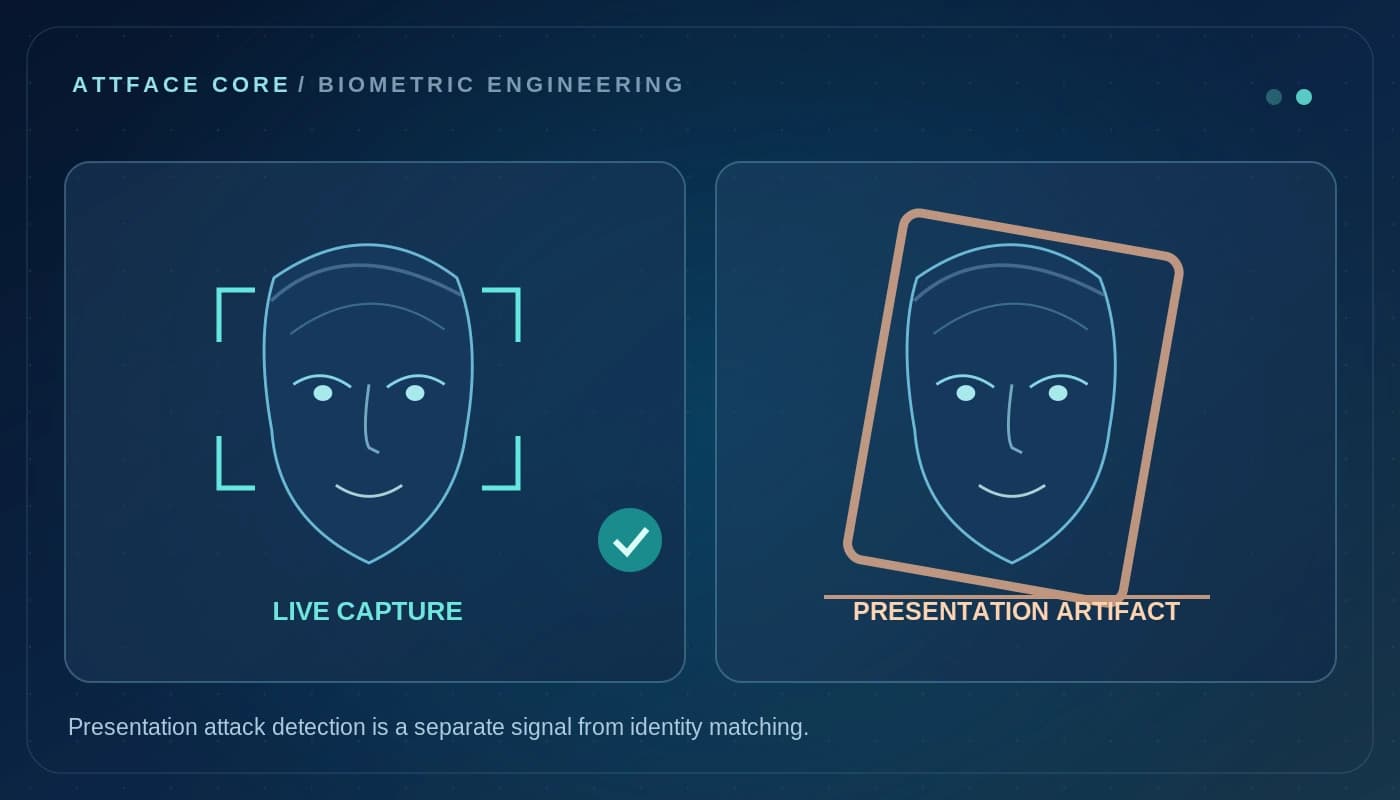
A loyalty experience should feel like recognition in the human sense: the business understands what a member wants and removes unnecessary friction. It should not feel like a camera is secretly deciding who walked through the door.
For that reason, the most credible face-AI use case in membership is an optional identity check for a known, enrolled account. The customer can still use an app, card or code. Face verification becomes one convenient way to confirm a member before a reward redemption, premium service or account recovery step.

Concept illustration; not a real AttFace UI, verified identification result or customer deployment.
Imagine a familiar counter interaction
A returning café member orders a drink. The app already knows the membership account; when a higher-value redemption requires confirmation, the customer chooses a short face verification on their own phone or a shared tablet with a clear privacy notice. The loyalty platform validates eligibility and presents the reward to staff.
The camera is not continually identifying every guest in line. Friends and nearby customers are outside the scope of the verification. The business needs to explain the enrollment purpose and what happens to biometric information afterward.
Conceptual opt-in membership flow; not a deployed loyalty product or real AttFace UI.
Why a narrow 1:1 flow is often better
A loyalty card or signed-in app already supplies the identity claim. Comparing the current capture to that member's enrolled reference makes the workflow easier to control, audit and explain. An open-ended search through a whole customer database invites more privacy questions and creates a different risk profile.
When a member has no suitable face sample or the capture is uncertain, use an alternative factor or ordinary service policy. Avoid treating an ambiguous score as grounds to refuse a purchase or accuse a customer of misuse.
Where face AI ends and customer experience begins
AttFace Core can contribute detection, quality, liveness and comparison components. A retailer's loyalty system still manages customer consent records, reward balance, promotion rules, redemption controls, point-of-sale integration and support.
A well-designed API boundary returns a policy-relevant verification event to the loyalty platform without leaking raw images into POS logs, analytics dashboards or marketing exports. If images are required for specific audit purposes, that purpose and retention period should be explicit.
Protect trust as the product scales
Consent needs to be meaningful and revocable. A customer should be able to continue using the service without enrolling a face, and an organization needs a process to remove old biometric templates. Restrict employee access to verification data and do not use an enrollment given for one purpose to build unrelated behavior profiles.
For multinational retailers, privacy rules differ by market. Engineering teams should avoid a one-size-fits-all legal assumption. Keep processing locations, audit trails, deletion capabilities and contractual responsibilities visible in the solution design.
Pilot a service, not a gimmick
Measure whether the optional identity step reduces account-sharing friction or improves redemption controls without harming customer satisfaction. Useful metrics include opt-in rates, completion time, fallback use, complaint volume and staff training effort. Security outcomes should be evaluated independently from marketing outcomes.
Try one clearly scoped redemption flow before expanding to other channels. Teams often learn more from the customer journey than from another accuracy presentation.
Verification versus recognition-based personalization
An explicit member verification can confirm an enrolled account during a chosen action. Recognizing people automatically as they enter a store is a different design with broader surveillance and privacy implications. Treat those as separate products with separate impact assessments; do not call passive customer identification a simple extension of loyalty check-in.
If the loyalty team wants personalized service, often the safest sequence is the member explicitly presenting a token or choosing an in-app feature before any face comparison takes place. The platform can then use existing membership data, rather than generating new behavioral profiles from camera footage.
The partner business case
For an ISV, the differentiator is not just the biometric model. It is the integration into point balances, anti-fraud rules, support cases and redemption channels. Price and package an optional verification capability according to actual usage, device requirements and support responsibility. A pilot should demonstrate a workflow customers value before the provider invests in broad deployment or new enrollment campaigns.
Extend existing loyalty software
AttFace Core is relevant for loyalty SaaS vendors, membership platforms and integrators who already operate customer-facing products. It supplies an embeddable face-verification layer; the partner owns the loyalty relationship and business rules.
Explore a partner integration with AIPractix if optional member verification could help a specific workflow while preserving customer choice.